Spring in the classroom has a very specific kind of energy, doesn’t it? Your students come back from spring break full of stories, excitement, and just a little bit of chaos. Add in all the fun distractions—St. Patrick’s Day, Easter, warmer weather, and longer days—and suddenly focus feels… optional.
This is the time of year when you need activities that help you calm the chaos without adding stress to your day. You still want meaningful learning, but you also need things that are easy to use, require little to no prep, and keep your students engaged.
That’s why I always lean on spring no-prep activities. They save time, keep students focused, and reinforce important skills in a fun, low-pressure way. Whether you need something for centers, early finishers, morning work, or those high-energy afternoons, these activities help you stay on track—without feeling overwhelmed.
Quick Tips to Calm the Chaos in Spring
Before jumping into activities, here are a few simple strategies that make a big difference during the spring months:
-
- Keep transitions short and clear to avoid losing attention
-
- Use quiet, structured tasks right after recess
-
- Offer choice when possible to increase engagement
-
- Mix movement with calm activities throughout the day
-
- Stick to predictable routines, even when energy is high
These small adjustments, combined with engaging activities, can completely change the tone of your classroom. Here are some of my favorite easy, stress-free spring activities that keep students learning and engaged!
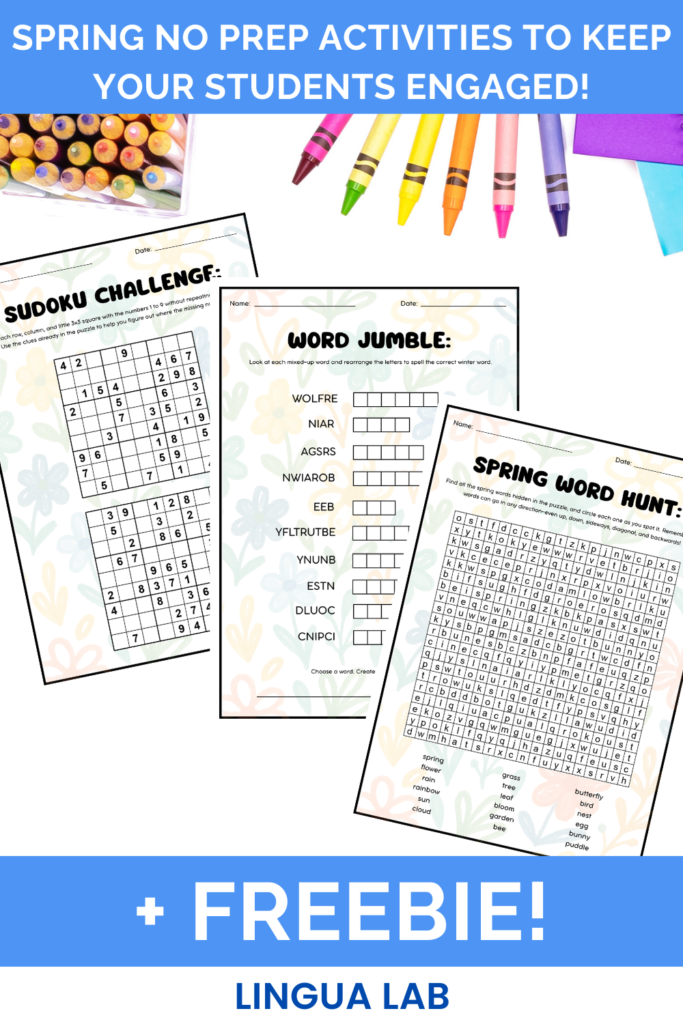
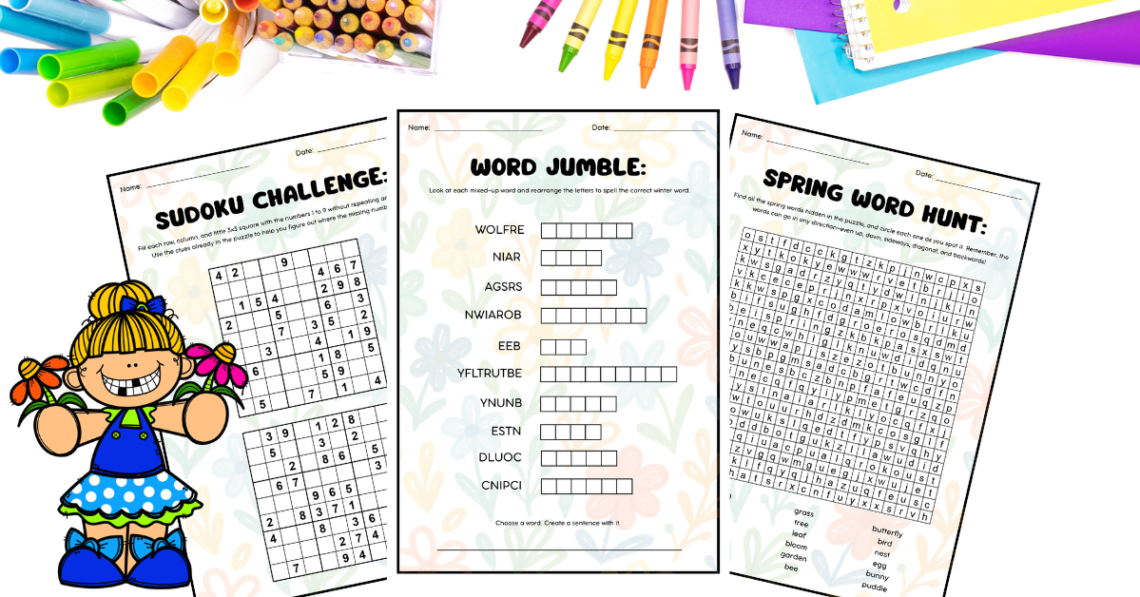
Word Jumble
Word jumble activities are one of the easiest ways to keep your students engaged while reinforcing vocabulary during the spring season. Students are given mixed-up letters and must rearrange them to form real words, often related to spring themes like flowers, rain, or holidays such as Easter and St. Patrick’s Day. This simple activity encourages critical thinking, spelling practice, and problem-solving skills.
Because word jumbles feel like a game, students stay motivated and focused longer, even during those high-energy spring days. They are perfect for independent work, literacy centers, or early finishers. Word jumbles also help improve attention to detail and build confidence as students successfully decode each word. Best of all, they require no prep, making them a stress-free option for busy teachers who still want meaningful learning happening in the classroom.
Word Search
Spring word search activities are a classroom favorite because they combine fun with meaningful vocabulary practice. Students search for hidden words related to spring themes such as weather, animals, and seasonal celebrations, reinforcing word recognition and spelling in an engaging way. These activities help improve focus, scanning skills, and visual discrimination.
Word searches are especially helpful for calming the classroom after recess or during transitions. They give students a quiet, structured task that still feels enjoyable. As students locate each word, they build confidence and strengthen their vocabulary naturally. These no-prep spring activities work well for independent practice, small groups, or fast finishers. They are simple, effective, and perfect for keeping students engaged while reviewing important language skills during the busy spring season.
Sudoku
Spring-themed Sudoku puzzles are a fantastic way to bring logic and math practice into your classroom in a fun, low-stress way. Instead of traditional numbers, you can use seasonal images or simple number patterns that students fill in while following Sudoku rules. This activity strengthens critical thinking, problem-solving skills, and logical reasoning.
Sudoku encourages students to think carefully, test ideas, and persist when challenges arise. It’s especially useful for developing patience and concentration—skills that can be harder to maintain during the energetic spring months. These puzzles are ideal for math centers, morning work, or early finishers. As a no prep activity, Sudoku saves you time while still providing meaningful learning opportunities. Students stay engaged because it feels like a puzzle, not work, making it a perfect balance of fun and academic practice.
Vocabulary Matching
Vocabulary matching is a simple yet powerful spring activity that helps students build and reinforce language skills. Students match words to pictures, definitions, or related terms, often using seasonal vocabulary like flowers, insects, or weather words. This activity strengthens word recognition, comprehension, and memory in a hands-on and engaging way.
Because it’s interactive, students stay focused and actively involved in their learning. Vocabulary matching works well for centers, small groups, or independent practice and can easily be differentiated for different levels. It’s also a great way to support English language learners by connecting visuals with words. As a no-prep spring activity, it requires minimal setup while delivering strong educational benefits. It keeps students busy, builds confidence, and helps expand vocabulary in a meaningful and stress-free way.
Crossword
Spring crossword puzzles are a fun and effective way to review vocabulary while encouraging critical thinking. Students read clues and fill in the correct words, often based on spring themes like holidays, weather, or nature. This activity helps improve spelling, reading comprehension, and word recall.
Crosswords require students to think carefully about each clue, which builds problem-solving skills and attention to detail. They are perfect for independent work, early finishers, or literacy centers. Because crosswords feel like a challenge or game, students stay engaged longer and are more willing to persevere. These no-prep spring activities are easy to implement and provide meaningful practice without extra planning. They also support vocabulary growth in a fun, structured way that keeps learning enjoyable during the busy spring season.
Sorting Activity
Spring sorting activities are a hands-on and engaging way to build vocabulary and thinking skills. Students sort words, pictures, or phrases into categories such as nouns, verbs, adjectives, or even seasonal themes like weather, animals, and plants. This activity helps students make connections between words and understand how language is organized.
Sorting encourages critical thinking, classification skills, and deeper understanding of vocabulary. It’s especially helpful for visual and hands-on learners who benefit from physically moving and organizing information. These activities are perfect for centers, small groups, or independent practice. As a no-prep option, they are easy to use and require minimal teacher preparation. Sorting activities keep students actively involved while reinforcing important language skills, making them a great choice for maintaining focus and engagement during the energetic spring months.
Conclusion
Spring in the classroom can feel busy, exciting, and sometimes a little overwhelming—but it doesn’t have to be stressful. With the right spring no-prep activities, you can keep your students engaged, learning, and focused without adding extra work to your day. These simple, fun activities help you calm the chaos, reinforce key skills, and create a positive classroom environment even during the most energetic times of the year.
Using activities like word jumbles, word searches, Sudoku, and vocabulary-based games gives your students meaningful practice while keeping things light and enjoyable. They work perfectly for centers, early finishers, morning work, or those moments when you just need a calm reset.
And the best part? You don’t have to start from scratch. There’s a freebie available that includes a word jumble, word search, and Sudoku—all ready to use! It´s available in English and also Spanish (separately). It’s a simple, stress-free way to support your students’ learning while saving time.
Sometimes, the easiest activities are the ones that make the biggest difference.
You can grab this FREE resource here.